Priority Export Sectors

Mongolia offers diverse investment opportunities across strategic sectors with strong growth potential, supported by its abundant natural resources, favorable market conditions and ongoing economic reforms.

Key priority sectors include:

Sector Overview: Renewable Energy

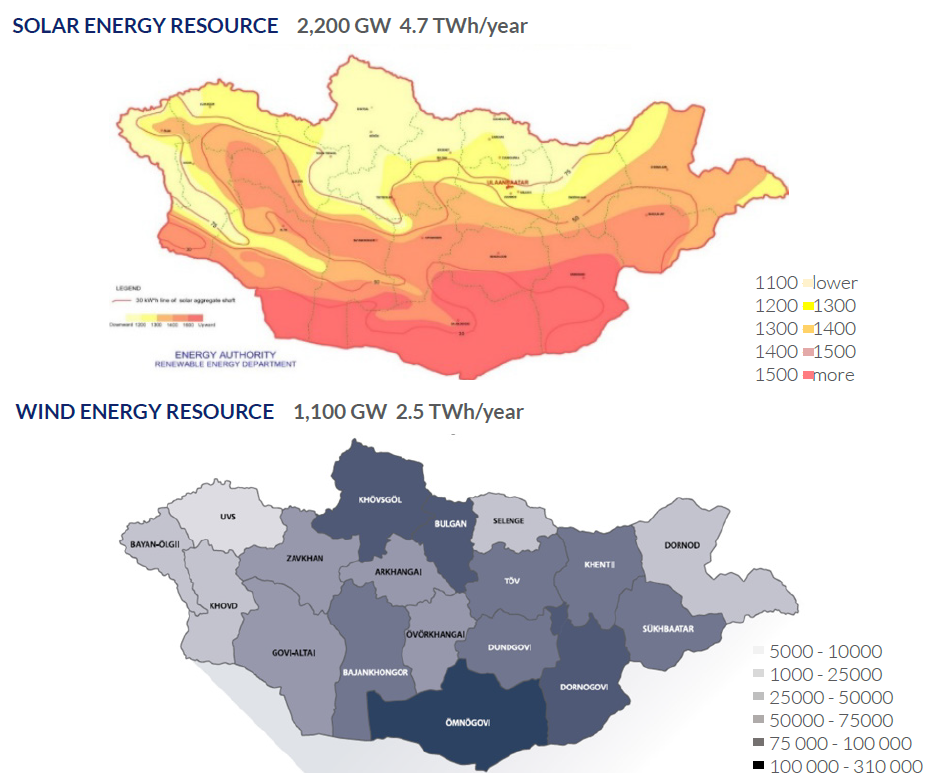
World-class solar and wind resources, a clear legal framework and competitive procurement open a large, early-stage market for renewable investors.

2,600 GW
Estimated solar and wind potential, far above the 1.6 GW installed capacity
30% by 2030
Government target for renewables in installed capacity
270 MW
Wind and solar capacity built, with USD 533 million invested
18.3%
Renewables’ share of installed capacity in 2023

A clear legal and institutional framework

The Energy Law of 2001 is the principal legislation regulating Mongolia’s energy sector. It governs energy licensing, including generation, transmission and distribution, and the construction of energy facilities. The Renewable Energy Law of 2007 complements it by providing the legal basis for the use, production and transmission of renewable energy, defining the rights and obligations of license holders and setting the framework for tariffs. The Renewable Energy Law has been amended several times, most recently in 2022. The Ministry of Energy formulates and implements renewable energy policy, and the independent Energy Regulatory Commission sets electricity tariffs, issues licenses and approves standard contracts for access to the transmission network.

Policy framework and institutions

Policy framework: Vision 2050 sets a 30 percent renewable capacity target by 2030; the New Recovery Policy of 2021 sets energy recovery priorities of South Gobi renewables, the 315 MW Eg River hydropower plant, 160 MWh of battery storage and grid upgrades; the Ministry of Energy sets policy and runs auctions and the Energy Regulatory Commission sets tariffs, licenses and standard network-access contracts

Strategic vision and policy goals

To implement Vision 2050 and address barriers to growth, Parliament adopted the New Recovery Policy in 2021. Its energy component calls for new energy sources and transmission networks and for greater reliability, with named priorities that include renewable sources in the South Gobi, the 315 MW Eg River hydropower plant and 160 MWh of battery storage. The government’s target is for renewables to supply 30% of installed capacity by 2030, up from 18.3% in 2023.

Where renewables stand today

Bar chart: renewables were 18.3 percent of installed capacity and 9.6 percent of electricity production in 2023, against a 30 percent capacity target for 2030

Tariffs and competitive procurement

Grid-connected renewable projects are selected through competitive procurement run by the Ministry of Energy, and the difference between renewable tariffs and the price of conventional power is covered through feed-in tariffs. After the 2019 amendment, tariffs are capped but no minimum is guaranteed. The current ceilings are:

Grid-connected source Tariff ceiling (USD per kWh)
Wind up to 0.085
Hydropower (up to 5 MW) 0.045 – 0.06
Solar PV 0.12

What this means for foreign investors

Wind and solar projects totaling 270 MW have already attracted USD 533 million, with support from development partners such as the EBRD, ADB, the Green Climate Fund and the World Bank. Investors should still weigh the risks: coal supplies about 90% of electricity, the grid is limited, and the World Bank estimates that average residential tariffs sit about 40% below cost recovery, which weighs on the sector’s finances. Storage and grid upgrades are therefore both a need and an opportunity. Investors should confirm current auction rules and tariff ceilings and take local legal advice before committing capital.

Why it matters for foreign investors
Only a tiny fraction of Mongolia’s renewable potential is in use, a 30% capacity target is set, and projects are awarded through transparent auctions, so the opportunity is large but depends on grid and storage progress.

Sources: GRATA International, Current Regulations on the Renewable Energy Law of Mongolia; Ministry of Energy presentation, Introduction of Energy System of Mongolia; World Energy Council, Mongolia profile (2025); UN Mongolia, Accelerating Mongolia’s just energy transition; BloombergNEF Climatescope, Mongolia; IPS News, World Bank tariff and subsidy estimates.

Renewable Energy Sector Infographic

Renewable Energy & Licensing

Mongolia now awards renewable projects through transparent price auctions, and licensed producers sell to the grid under standard agreements.

220 MW + 440 MWh
Solar and storage awarded in the first competitive auction
4.85–7.8 cents
Winning tariffs per kWh in that auction
USD 5,000 / MW
Bid security required to take part in an auction
5–25 years
Term of generation and transmission licenses

Licensing under the Energy and Renewable Energy Laws

Most activities in Mongolia’s energy sector require a license, and the Energy Regulatory Commission (ERC) is the main body that oversees licensing and monitors license holders. A legal entity that wants to build a renewable power source must obtain a license under the Energy Law, and a renewable generator must also hold a license for generating electricity. Applications go to the ERC or to the regulatory board of the relevant aimag or the capital city. According to a law-firm summary, the ERC grants separate permits for construction and for generation, and licenses for generation and transmission run for 5 to 25 years and can be extended.

What a renewable project needs

What a renewable project needs in Mongolia: win the project through an auction or the standard selection process; hold construction and generation licenses from the Energy Regulatory Commission; sign a power purchase agreement with the National Dispatch Center on the model agreement; and meet grid rules by following dispatch requirements and funding the connection line. Generation and transmission licenses run for 5 to 25 years

Competitive project selection

Renewable projects connected to the grid are selected competitively. The Minister of Energy approved a revised Regulation on Project Selection in May 2026, replacing the 2025 version. Projects can now be chosen through a standard selection process or through an auction, and the scope covers solar, wind and projects that include battery storage; the earlier minimum grid voltage of 6 kV has been removed. In an auction, bidders place sealed price offers and then bid down in steps of at least 0.05 US cents per kWh, and the lowest price wins. The winner is granted the right to conclude a power purchase agreement within five working days of the auction.

The first auction

The first competitive auction drew interest from 115 domestic and international companies, and 19 bidders qualified after technical evaluation. Five bidders were selected for 220 MW of solar and 135 MW / 440 MWh of battery storage in five provinces, with winning tariffs from 4.85 US cents per kWh in Dundgovi to 7.8 US cents in Khentii. The National Dispatching Center has signed the power purchase agreements, and the projects are expected to be operating before the peak winter demand season.

Prices in the first auction

Bar chart in US cents per kWh: the lowest winning tariff in the first auction was 4.85, the highest was 7.8, and the solar tariff ceiling under earlier rules was 12

The procurement pipeline

Procurement Scope Status
First auction (completed) 220 MW solar with 135 MW / 440 MWh storage across five provinces Power purchase agreements signed
Second auction (announced for 11 September 2026) Independent power producer with a stabilization solution for the Gobi region at 99.5% reliability; no capacity target stated Outcome not confirmed in the sources I found
ADB-supported tender About 110 MW solar with 52 MW / 188 MWh storage across five sites Request for proposals planned for the second half of 2026
Wind project 100 MW wind plant in Saintsagaan, Dundgovi province Auction announced by the Ministry of Energy

What this means for foreign investors

Foreign companies can take part, but they must do so through a Mongolian partner. Under the 2026 regulation, a foreign entity may bid in partnership with a company registered in Mongolia, and the second auction required a consortium in which the Mongolian company holds the majority. Bidders and their beneficial owners must also clear corruption, money-laundering and sanctions checks, including the debarment lists of international financial institutions. The bid security is forfeited if a winner refuses to sign the power purchase agreement, and independent producers must pay for the line from their plant to the transmission network and follow dispatch rules. Falling auction prices mean margins will depend on cost control, so investors should confirm the current regulation and take local legal advice before committing capital.

Why it matters for foreign investors
A defined license route, published auction rules and signed power purchase agreements give renewable investors a clearer path to market, with a pipeline of further auctions and partner requirements to plan for.

Sources: PwC Mongolia, Legal Alert No. 4 (July 2026); pv magazine, Mongolia completes first renewable energy auction; Invest Mongolia, energy licensing; Law on Renewable Energy, unofficial translation; GRATA International, Regulation of Renewable Energy in Mongolia and Current Regulations on the Renewable Energy Law; ADB, support for the solar and storage auction; TaiyangNews, 110 MW solar and 188 MWh storage auction; Gogo.mn, Saintsagaan wind auction.

Renewable Energy Sector Infographic

Investment Opportunities

A coal-dependent system under winter pressure, tougher climate targets and falling support for new coal create a clear opening for renewables, storage and clean heating.

About 90%
Share of electricity still supplied by coal
~2/3
Share of greenhouse gas emissions from the energy sector
6–10x
Ulaanbaatar PM2.5 levels against WHO guidelines
30.3%
Unconditional emission cut targeted by 2035 under NDC 3.0

Urban growth and ger-area heating

Mongolia is urbanizing quickly, and demand for energy in and around Ulaanbaatar is growing. The informal ger areas on the edge of the city have no district heating, so households heat with solid fuel. Before 2018, about 220,000 ger households burned 1.2 million tons of raw coal each year, which was blamed for 80% of the capital’s air pollution. Raw coal has been banned in Ulaanbaatar since May 2019 and replaced by refined coal briquettes, and pollution is reported to have fallen by about half, but the city’s winter air is still heavily polluted.

A system built on coal

The Asian Development Bank describes Mongolia’s energy system as the most coal-dependent among its developing member countries. In 2018, coal-fired combined heat and power plants produced 93% of the power generated in the Central Energy System, which serves more than 80% of domestic demand, and the national NDC summary says coal still supplies about 90% of electricity. This reliance drives winter pollution, with Ulaanbaatar’s PM2.5 levels 6 to 10 times above WHO guidelines, and makes the energy sector the largest source of greenhouse gases, at about two-thirds of the total.

Emission cuts targeted under the earlier NDC

Bar chart of emission cuts targeted for 2030 under the earlier NDC in million tons of CO2: power generation 4.9, transportation 1.7, industry 0.7, totaling 7.3

Decarbonization goals

The figures often quoted for 2030 come from the earlier NDC: emissions were projected to reach 51.5 million tons of CO2 by 2030 in a business-as-usual case, with energy’s share rising to 81.5%, against a target cut of 7.3 million tons made up of 4.9 from power generation, 0.7 from industry and 1.7 from transportation. Mongolia replaced that NDC in September 2025 with NDC 3.0, which targets an unconditional 23.0% cut by 2030 and 30.3% by 2035 against business as usual, and up to 52.8% by 2035 if carbon sinks and international support are included. The renewable energy target is 30% of installed capacity by 2030, up from 18.3% in 2023.

Rising climate ambition

Bar chart of Mongolia's greenhouse gas reduction targets against business as usual: 22.7 percent by 2030 under the earlier NDC, 30.3 percent unconditional by 2035 under NDC 3.0, and up to 52.8 percent conditional by 2035

Urgent market needs

Winter peak supply is the most pressing problem: the ADB calls the energy supply shortage during winter peak hours an urgent challenge. Climate policies have also made financing for new coal-fired plants harder to find, so investment in new capacity has lagged. At the same time, output from renewable plants is curtailed during off-peak hours, which has made renewable investment less attractive for private companies. Storage is therefore central, and the ADB approved a USD 100 million loan in 2020 for the country’s first large-scale battery energy storage system.

Where investors can enter

The openings are widening. Renewable projects with storage are now awarded through competitive auctions, and the first one covered 220 MW of solar and 135 MW / 440 MWh of storage. NDC 3.0 also lists measures that need private capital, including renewable integration, green buildings, upgraded heating boilers and efficiency improvements, and Mongolia has introduced carbon credit registry rules that open the way for carbon finance. Key risks to weigh are an old and weak grid, electricity tariffs well below cost recovery and the winter-driven nature of demand, so investors should confirm current auction terms and take local legal advice before committing capital.

Why it matters for foreign investors
Winter shortages, tougher climate targets and limited appetite for new coal make renewables, storage and clean heating a priority market, with competitive auctions as the clearest way in.

Sources: ADB, Unlocking Mongolia’s Rich Renewable Energy Potential and battery storage loan; Nautilus Institute, Mongolia energy security report; PwC Mongolia, Legal Alert No. 1 (2026) on NDC 3.0; UNEP LEAP, Mongolia’s NDC 3.0; UNDP Climate Promise, Mongolia; UN Mongolia, Accelerating Mongolia’s just energy transition; pv magazine, first renewable energy auction; Chambers, Carbon credit registry regulation; IPS News, World Bank tariff estimates.

News & events

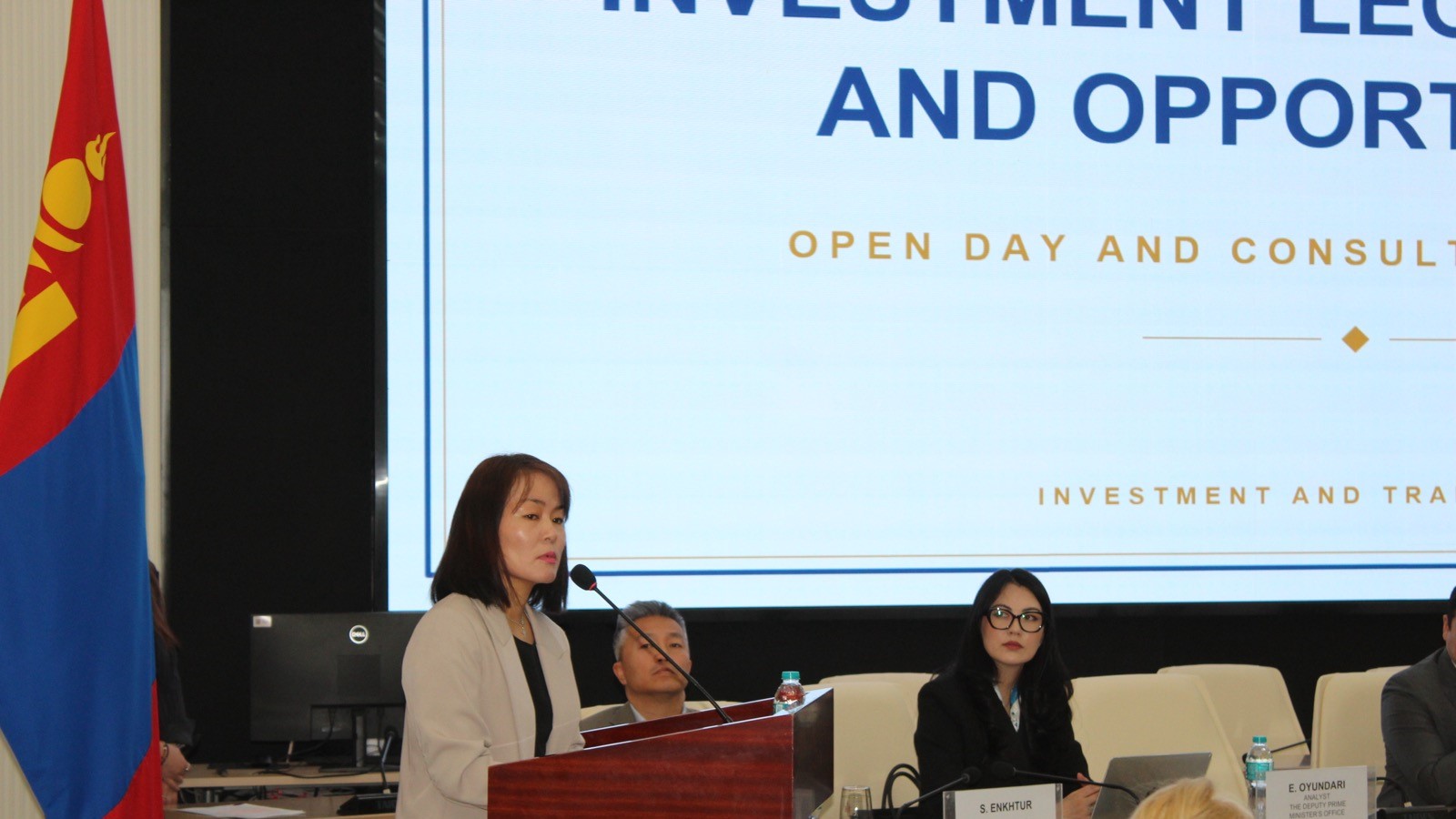
“INVESTMENT LEGAL REFORM AND OPPORTUNITIES” DISCUSSION SUCCESSFULLY HELD
News 2026.10.20

“INVESTMENT LEGAL REFORM AND OPPORTUNITIES” DISCUSSION SUCCESSFULLY HELD

The Office of the Deputy Prime Minister of Mongolia, the Ministry of Foreign Affairs, and the Investment and...

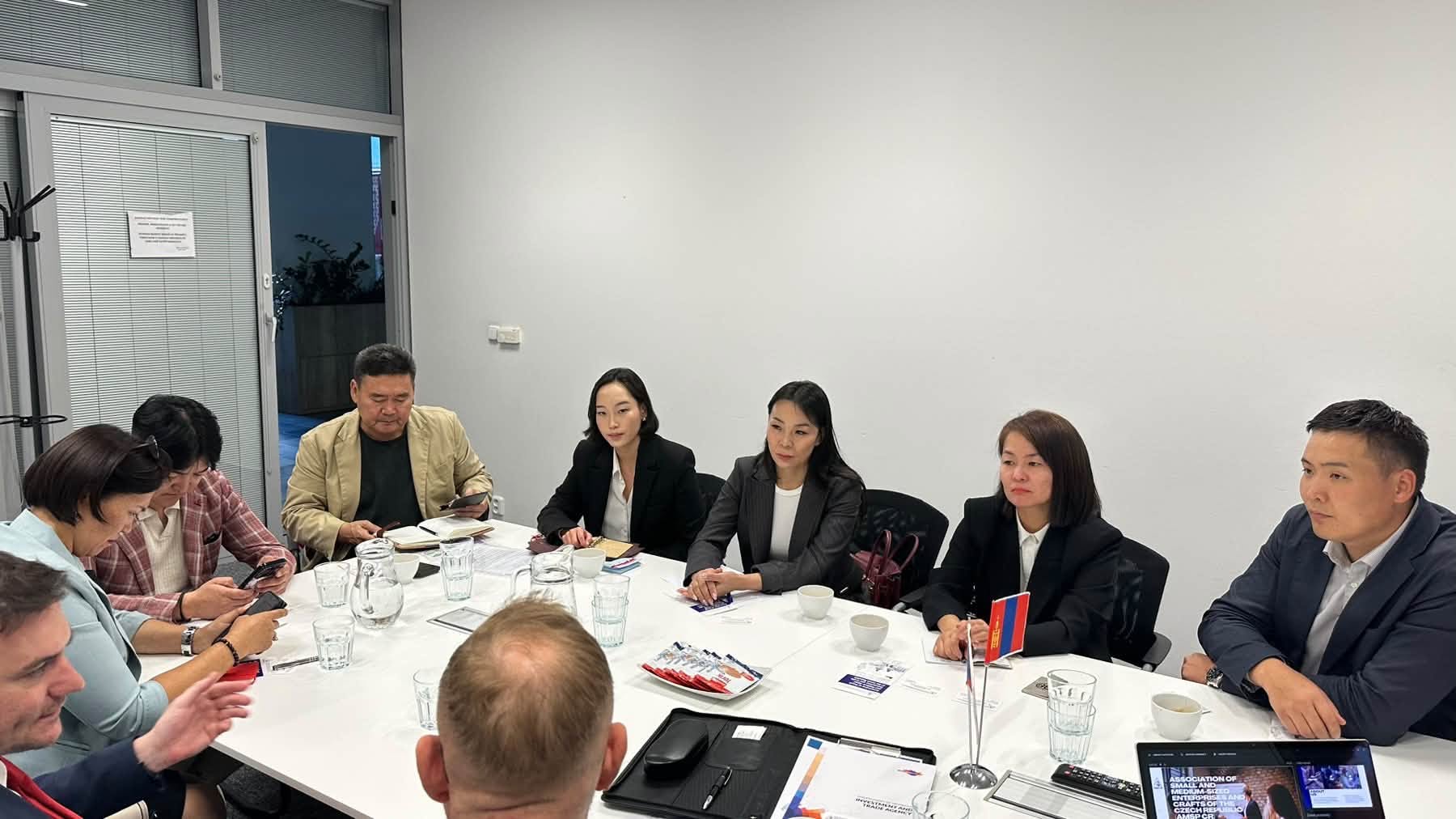
MONGOLIA AND THE CZECH REPUBLIC EXCHANGE EXPERIENCE ON SUPPORTING SMEs AND ACCESS TO INTERNATIONAL MARKETS
News 2026.10.08

MONGOLIA AND THE CZECH REPUBLIC EXCHANGE EXPERIENCE ON SUPPORTING SMEs AND ACCESS TO INTERNATIONAL MARKETS

  As part of the visit focused on Czech–Mongolian cooperation in science, innovation, and support for small and...

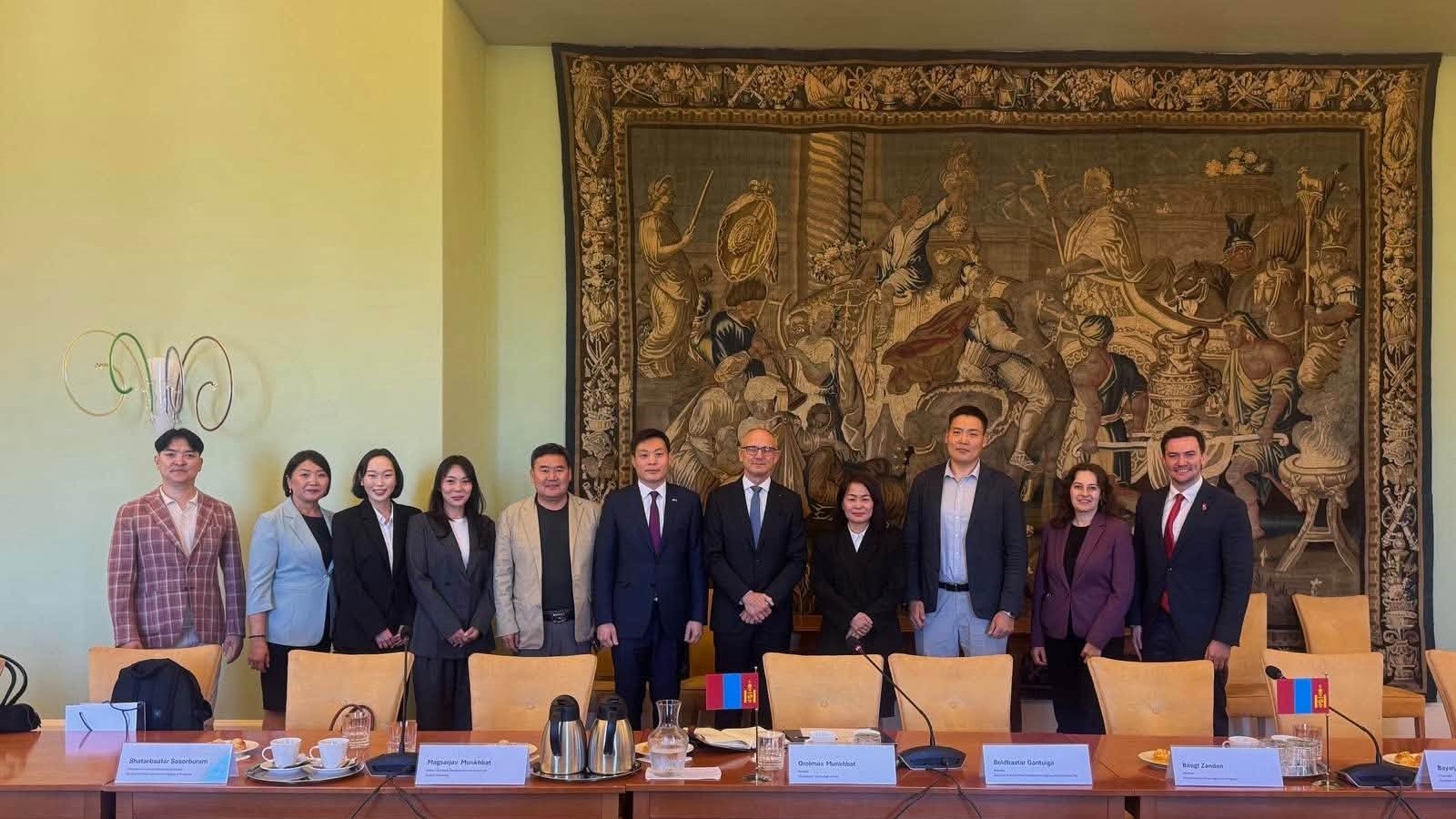
DISCUSSING OPPORTUNITIES FOR COOPERATION WITH THE CZECH REPUBLIC IN TECHNOLOGY, RENEWABLE ENERGY, AND INNOVATION
News 2026.10.07

DISCUSSING OPPORTUNITIES FOR COOPERATION WITH THE CZECH REPUBLIC IN TECHNOLOGY, RENEWABLE ENERGY, AND INNOVATION

A Mongolian delegation led by Ms. B. Zandan, Director General of the Investment and Trade Agency, met with...